Persian Cat Line Art Illustrations: A Designer's Collection
More Than Just a Cat Drawing
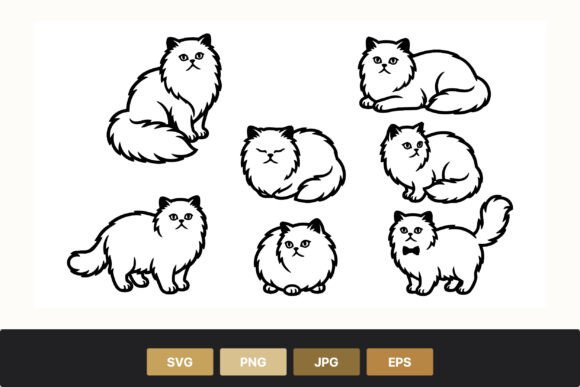
There's a certain elegance to a Persian cat that's hard to capture, but line art has a unique way of distilling it down to its most charming essence. When you look at a collection of Persian cat line art illustrations, you're not just seeing outlines; you're seeing personality, poise, and a whole lot of fluff translated into simple, graceful strokes. This particular collection goes beyond a single static image. It's a curated set showing these majestic felines in various states of repose and alertness—sitting regally, standing with purpose, and lying in a state of complete and utter relaxation. The standout, of course, is the distinguished fellow sporting a bow tie, adding a touch of whimsical sophistication that makes this set versatile for countless projects.
The beauty of this style lies in its simplicity and the skill of the linework. It avoids heavy shading or complex textures, relying instead on the weight and flow of the lines to define the cat's form. You can almost feel the density of the fur around the neck and the gentle curve of a paw. This approach makes the illustrations incredibly adaptable. They feel modern and clean, yet they possess a classic, almost timeless quality. For a designer, this isn't just clip art; it's a foundational element that can be dressed up or down to fit a brand's voice, whether it's playful, luxurious, or minimalist.
Practical Applications for Your Creative Workflow
So, where do Persian cat line art illustrations actually work well? The short answer is: almost everywhere. Their true strength is in their flexibility. Think about brand identity for a boutique pet groomer, a high-end cat café, or a sustainable pet food company. These illustrations can form the core of a logo, become a recurring motif on packaging, or serve as elegant social media icons. The line art style ensures they remain legible and impactful even at small sizes, a crucial consideration for web design and mobile applications.
For editorial design and publishing, they are gold. Imagine them as spot illustrations in a magazine article about feline care, chapter headers in a whimsical novel, or decorative elements on a blog post about home decor. The consistent style across the different poses allows you to create a visual narrative throughout a layout. Entrepreneurs and small business owners will find them perfect for creating cohesive marketing materials—from business cards and letterheads to email newsletter headers and thank you cards. The set provides a ready-made visual language that saves time and ensures consistency, a key component of professional design.
From Digital Screens to Printed Goods
The utility extends into the tangible world of packaging design and print. A single sitting cat illustration could be embossed on a box of luxury cat treats. The collection of poses could be used to create a charming pattern for wrapping paper or tote bags. For crafters and hobbyists, the possibilities are endless: iron-on transfers for t-shirts, stencils for home projects, or templates for intricate paper-cutting art. The fact that the download package includes SVG, PNG, EPS, and JPG formats means you're not constrained by your software or your final output. The SVG is perfect for scaling without loss of quality in vector editors, the PNG with its transparent background is ideal for layering in Photoshop or Canva, the EPS works seamlessly in professional print workflows, and the JPG offers a quick solution for digital previews or simple applications.
Making the Most of Your Illustration Set
Before you dive in, a little strategic thinking goes a long way. First, consider the overall tone of your project. While these illustrations are versatile, their inherent elegance leans towards a certain sophistication. They might not be the best fit for an ultra-rugged or grunge-style design, but they excel in contexts that value grace, charm, and a touch of personality. The cat with the bow tie, for instance, immediately suggests a celebratory or formal touch—perfect for event invitations or premium product branding.
Next, think about font pairing. Line art illustrations have a delicate visual weight. Pairing them with a heavy, blocky sans serif font could create an interesting contrast, but it might also feel disjointed. Often, a better match is a complementary serif font with some character, or a clean modern typography choice that doesn't compete for attention. For a more personal touch, a subtle script font or handwritten font could work beautifully for headlines or logos, especially when the cat illustration acts as a supporting icon rather than the central focus. Always test your pairings in context to see how they affect visual hierarchy and overall readability.
Finally, use the collection strategically. Don't just use the same sitting cat everywhere. Use the standing pose to imply alertness or forward motion in a call-to-action. Use the lying-down cat to evoke comfort and relaxation in a blog sidebar or on a product page for pet beds. By varying the illustrations throughout a project, you maintain visual interest while reinforcing a cohesive brand identity. This thoughtful application is what separates good design from great design, turning a simple set of illustrations into a powerful tool for audience engagement and brand recognition. It's a practical, ready-to-use asset that respects both your creative vision and your production workflow.
Persian Cat Line Art: Elegant Illustrations for Designers
The Timeless Appeal of Line Art Persian Cats
There's a quiet sophistication in a well-executed line drawing. It strips away the noise of color and complex shading, leaving only the essential form and character of the subject. When that subject is a Persian cat, known for its luxurious fur and dignified demeanor, the result is particularly captivating. A collection of Persian cat line art illustrations does more than just depict a feline; it captures a mood—a blend of regal composure and playful elegance. This specific set, featuring cats in sitting, standing, and lying poses—with one distinguished gentleman in a bow tie—offers a versatile visual vocabulary for any creative project. The style is clean, modern, and infinitely adaptable, making it a valuable asset in a designer's toolkit.
The personality in these illustrations comes from the thoughtful linework. You can see the weight in the sitting cat's posture, the alert curiosity in the standing pose, and the complete, boneless relaxation of the lying cat. The bow tie isn't just an accessory; it's a narrative detail that introduces a touch of whimsy and formality, allowing the artwork to cross contexts from playful branding to upscale stationery. This isn't generic clip art. It's a cohesive set with a consistent visual language, where the quality of the stroke defines the texture of the fur and the intelligence in the eyes. For professionals, this consistency is key—it allows for seamless integration into a brand's visual system, ensuring every touchpoint feels unified and intentional.
Integrating Feline Elegance into Your Projects
The real-world applications for these Persian cat line art illustrations are surprisingly broad, limited mainly by the project's tone and audience. Their inherent elegance makes them a natural fit for brand identity work, particularly for businesses that want to communicate luxury, care, or artisanal quality. Think of a high-end pet boutique, a bespoke grooming service, or a specialty tea company. The illustrations can become the cornerstone of a logo design, evolve into a pattern for packaging design, or serve as signature icons across a web design layout. Their simplicity ensures they scale beautifully from a tiny favicon to a large-format print without losing clarity.
Beyond branding, these assets excel in editorial design and publishing. They can add sophisticated visual breaks in a magazine layout, serve as charming chapter headers in a book, or illustrate a blog post about feline behavior or home comfort. For content creators and marketers, they are perfect for creating engaging social media graphics—think Instagram story highlights, quote cards, or subtle background elements that add personality without overwhelming the message. The inclusion of the bow-tied cat specifically opens up avenues for event-related design: invitations, menu cards, or party favors for a cat-themed celebration or a more general upscale gathering where a touch of animal charm is desired.
From Digital Files to Physical Products
The practical value of this collection is magnified by its file delivery. The ZIP package containing SVG, PNG, EPS, and JPG formats is a thoughtful nod to real-world production workflows. The SVG file is a designer's best friend for any vector-based work in Adobe Illustrator or Affinity Designer, allowing for infinite scaling and easy color adjustments. Need the cat to be part of a complex font pairing in a logo? The vector format ensures it harmonizes with any typeface, whether you choose a classic serif font or a clean sans serif font.
The PNG with its transparent background is indispensable for quick compositing in Photoshop, Canva, or for use in web development. The EPS file ensures compatibility with older professional software and many print-on-demand services. Meanwhile, the JPG offers a straightforward option for digital previews, mood boards, or applications where file size is a concern. This multi-format approach means you're not just buying images; you're investing in design assets that integrate smoothly into your existing process, whether you're crafting a brand identity, producing social media graphics, or preparing files for a commercial printer.
Choosing and Applying with Strategic Intent
Selecting and using these illustrations effectively requires a bit of strategic thinking. First, evaluate the fit with your project's core message. The style is inherently refined and somewhat whimsical. It might not align with a brand that needs to convey raw, industrial power, but it's perfect for those aiming for charm, sophistication, or playful professionalism. Test how the different poses influence the layout's balance. A standing cat can draw the eye upward, suggesting progress or alertness, while a lying cat can create a sense of calm and stability in a footer or sidebar.
Consider how the illustrations interact with your chosen modern typography. A delicate line drawing can be overwhelmed by a very heavy, bold display font. Often, a pairing with a medium-weight serif font or a geometric sans serif font creates a balanced and elegant hierarchy. For a more personal or creative project, a subtle script font or handwritten font can complement the illustration's character without competing for attention. Always mock up your combinations to check for visual harmony and readability.
Finally, think about licensing and application scope. For commercial use, ensure the license covers your intended application, whether it's for client work, merchandise, or digital products. Use the collection as a system. Don't just pick one cat; use the variety of poses to create visual storytelling across a campaign. The sitting cat for the main logo, the standing cat for a "new arrivals" icon, and the lying cat for a "contact us" or "relax" button. This systematic use builds a strong, recognizable visual identity that feels both professional and deeply engaging, turning a simple set of illustrations into a cornerstone of your creative communication.